1. Wi-Fi® jest zarejestrowanym znakiem towarowym będącym własnością organizacji Wi-Fi Alliance®.
2. Wi-Fi® is a registered trademark of Wi-Fi Alliance®.
Mass Comparators
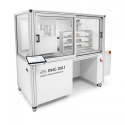
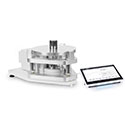
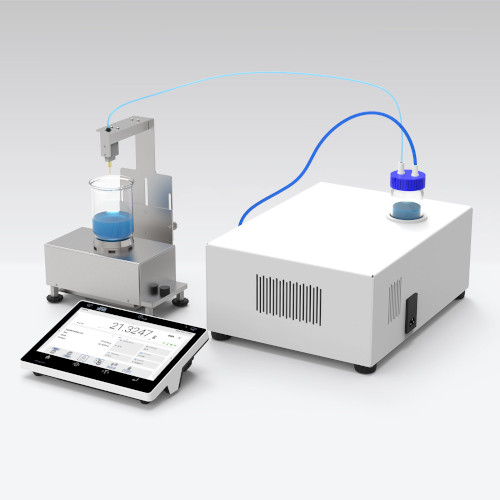
Mass comparators from RADWAG are high-resolution weighing instruments designed to compare the mass of a test object with a reference standard. They are used to calibrate weights and mass standards of classes E1, E2 and lower in accordance with OIML R 111 – in national metrology institutes, accredited calibration laboratories, legal metrology offices and by weight manufacturers. The range includes manual, automatic, robotic and vacuum mass comparators, density determination comparators and susceptometers for magnetism measurement – with a readability of 10 ng to 10 g and a maximum capacity of 510 mg to 2100 kg. All instruments are designed and manufactured by RADWAG in Poland.
What is a mass comparator?
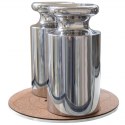
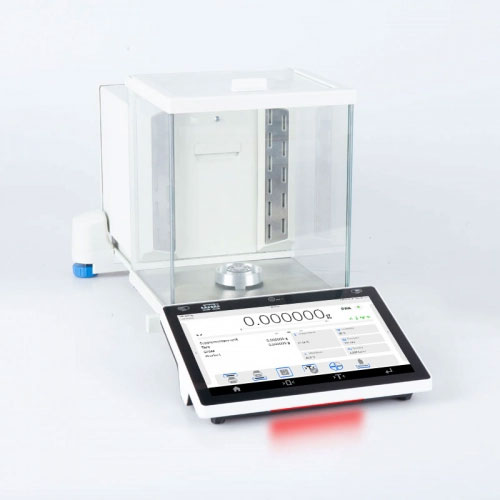
A mass comparator is a balance optimised not for absolute accuracy across the entire weighing range, but for minimum repeatability and very high resolution. What is determined is not the mass itself, but the difference between the test weight and a reference weight of known mass. Because both weights have almost the same nominal value, linearity and adjustment errors of the balance have practically no effect on the result. This makes it possible to achieve measurement uncertainties that are out of reach for standard laboratory balances.
Types of RADWAG mass comparators
| Group | Readability [d] | Max capacity [Max] | Application and key features |
|---|
| Manual mass comparators | 0.1 µg – 10 g | 6 g – 2100 kg | calibration of class E1, E2 and lower weights, from milligrams to 2 t large weights; UYA 5Y.KO, XA 5Y.KO, WAY 5Y.KO, APP 5Y.KO, 5Y.PM.KB, HRP 5Y.KO and HRP 5Y.KB series |
| Automatic mass comparators | 10 ng – 1 mg | 510 mg – 51 kg | automatic weight exchange from a magazine, comparison cycles without the operator present; NANO.AK-8/500.5Y, UMA, AK-4 and AKM-2 series |
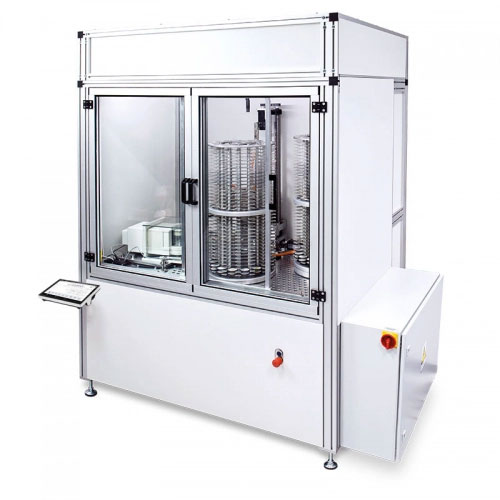
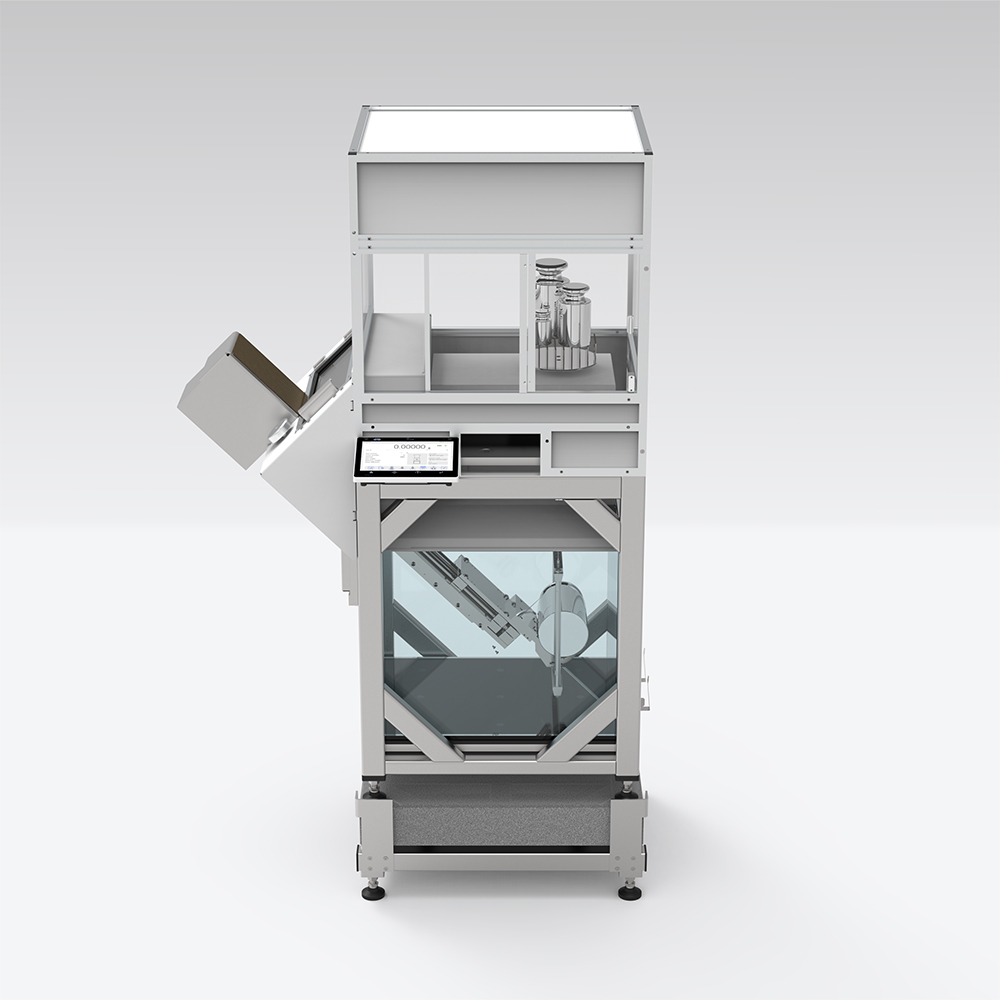
| Robotic mass comparators | 0.1 µg – 0.1 mg | 6.1 g – 20.2 kg | magazine with 10 to 120 positions, comparator pan for 3 standards at once, automatic dissemination of the mass unit; RMCM 5.5Y, RMCM 10.5Y, RMC 100.5Y, RMC 1000.5Y, RMC 10000.5Y and RMC 20000.5Y models |
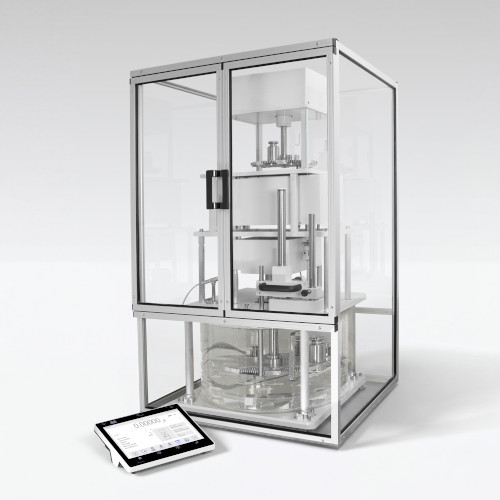
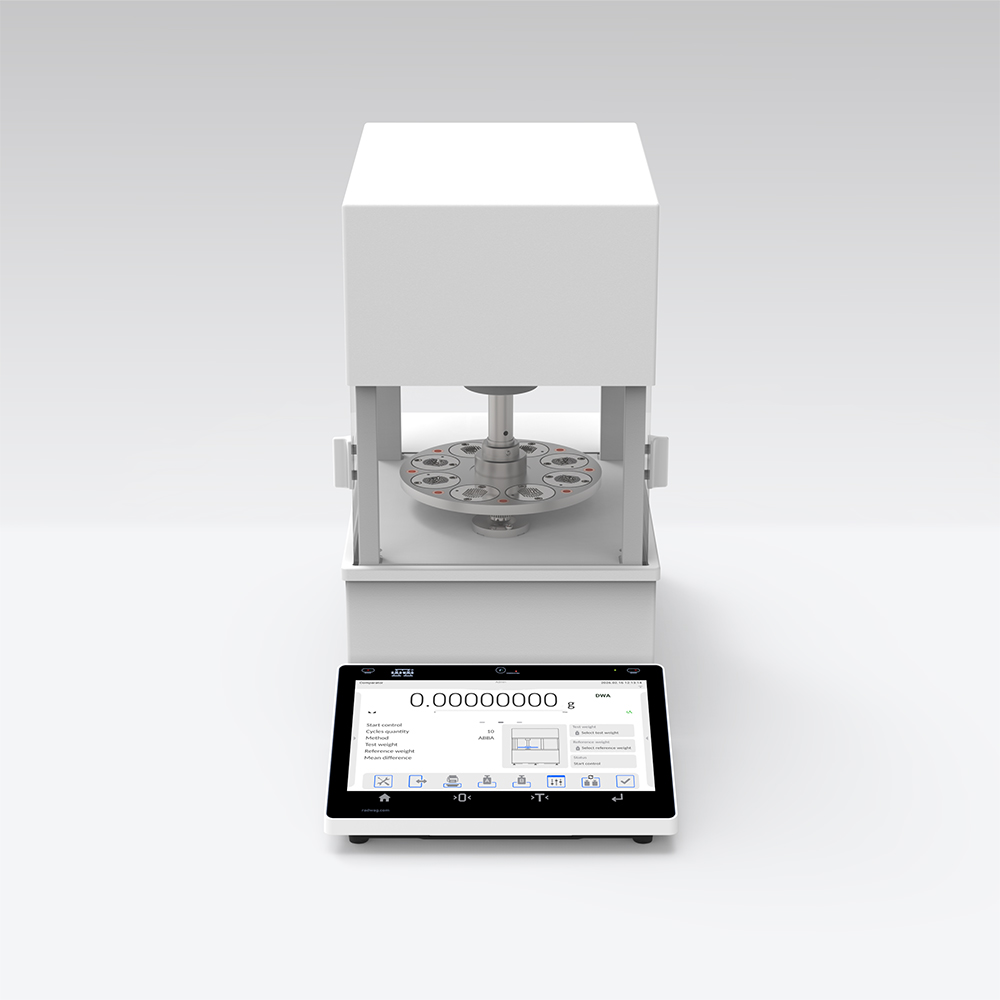
| Automatic vacuum mass comparators | 0.1 µg | 1002 g | comparison of 100 g to 1 kg standards in a vacuum down to 10⁻⁶ mbar without the influence of air buoyancy, 6-position magazine for cylindrical and spherical standards, optional LOAD LOCK system and transport container |
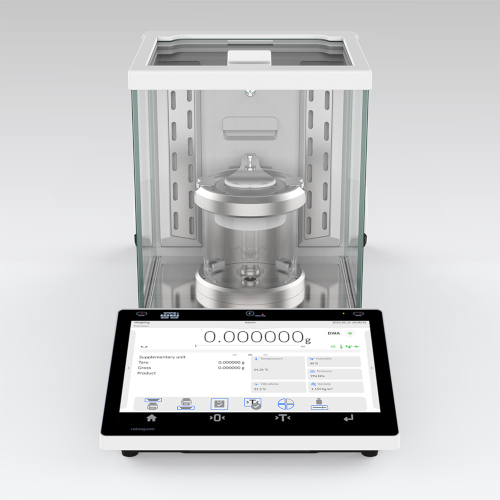
| Density measurement comparators | 0.01 mg – 1 mg | 1110 g – 26.1 kg | determination of density and volume of weights from 1 g to 20 kg, magazine with 2 to 8 positions, self-centring pan, temperature sensor with an accuracy of 0.001 °C |
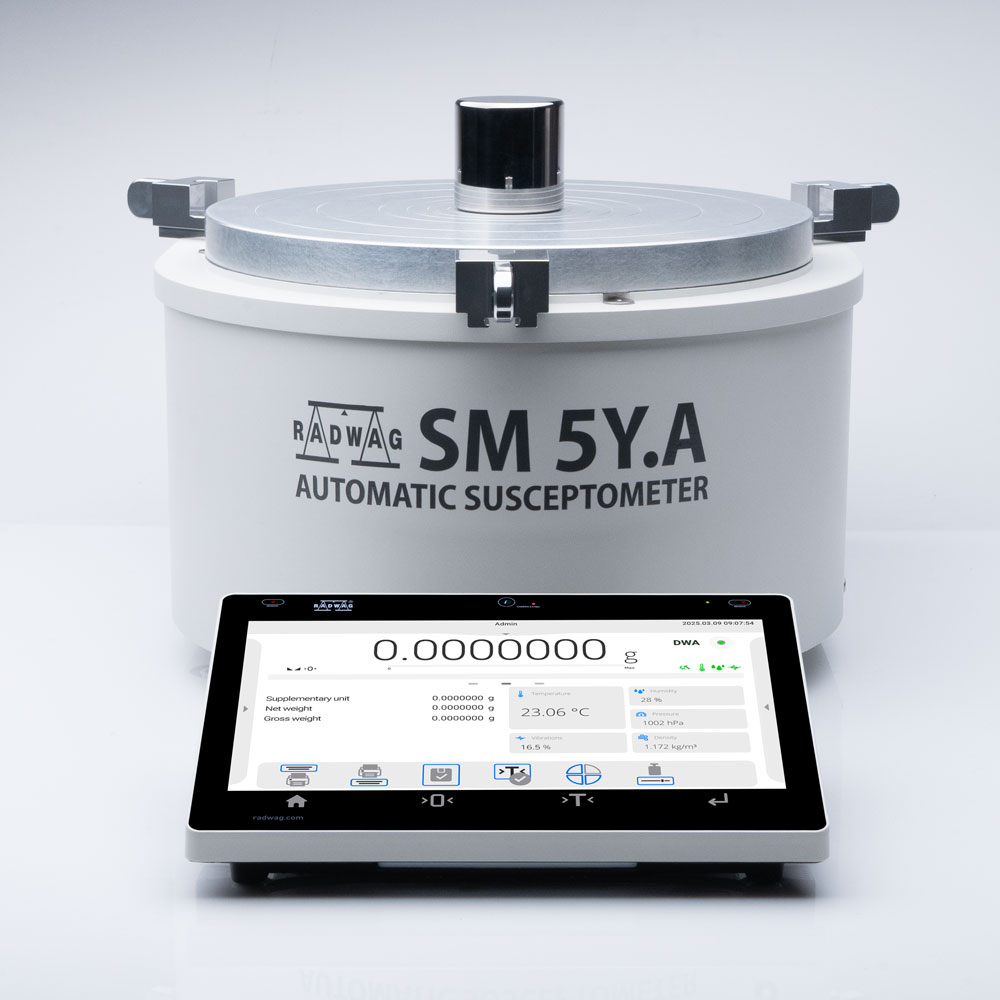
| Manual susceptometers | 0.1 µg – 1 µg | 50 kg | measurement of magnetic susceptibility and permanent magnetisation of weights from 2 g to 50 kg, modular design – can also be used as a comparator or balance |
| Automatic susceptometers | 1 µg | 50 kg | automatic measurement of susceptibility and magnetisation of class E1 and lower weights from 2 g to 50 kg, no additional software required, adjustable measuring ranges |
Comparator pans, inserts, weight grippers and other accessories can be found in Mass comparators accessories.
How does mass comparison work?
Weights are calibrated using the comparison method in accordance with OIML R 111. The operator or the comparator mechanism alternately places the reference weight (A) and the test weight (B) on the pan, usually in an ABBA or ABA cycle. Repeating several cycles and averaging the results reduces the influence of drift and random disturbances. The result is then corrected for air buoyancy, calculated from the air density (temperature, humidity, pressure) and the density or volume of the weights.
This is why RADWAG mass comparators work with the THBR 2.0 system for monitoring ambient conditions. RMCS software manages the entire process – from order intake and measurement to issuing the calibration certificate – and allows remote control of automatic comparators.
Manual, automatic or robotic?
- Manual mass comparators – the operator exchanges the weights. They are the most flexible solution for laboratories calibrating weights of different nominal values and shapes, and cover the widest load range, up to 2100 kg.
- Automatic mass comparators – a mechanism exchanges the weights from a magazine. The measurement runs without the operator at the weighing chamber, which reduces temperature effects and air movement and improves repeatability. Measurements can also be run overnight.
- Robotic mass comparators – a robot with a magazine of up to 120 positions automatically calibrates complete weight sets, including dissemination of the mass unit from the reference weight to weights of other nominal values. Ideal for laboratories with a very high workload.
- Vacuum mass comparators – comparison in a vacuum without air buoyancy, for the highest requirements of national metrology institutes, e.g. for disseminating the mass unit after the redefinition of the kilogram.
Density and magnetism measurement of weights
For weights of the highest accuracy classes, OIML R 111 requires not only mass determination but also testing of density and magnetic properties. The density or volume of the weight is needed for the air buoyancy correction – RADWAG density measurement comparators determine it automatically for weights from 1 g to 20 kg. Excessive magnetic susceptibility or permanent magnetisation creates forces between the weight and the balance that distort the result – RADWAG susceptometers measure both quantities for weights from 2 g to 50 kg.
Applications of mass comparators
- national metrology institutes – dissemination of the mass unit from national standards to reference standards,
- accredited calibration laboratories according to ISO/IEC 17025 – calibration of weights and weight sets for customers,
- legal metrology offices – verification of working standards and weights used for the verification of scales,
- weight manufacturers – final inspection and adjustment of mass standards,
- industrial and pharmaceutical laboratories – in-house calibration of their own test weights used for balance checks,
- research – high-precision mass determination and stability studies of mass standards.
How to choose the right mass comparator?
- Nominal values of the weights – for milligram and gram weights, choose comparators with a readability of 0.1 µg to 1 µg (e.g. UYA 5Y.KO, XA 5Y.KO, UMA, NANO.AK); for kilogram weights, WAY 5Y.KO or AK-4; for 20 kg to 50 kg, APP 5Y.KO, 5Y.PM.KB or AKM-2; and for large weights up to 2 t, HRP 5Y.KO and HRP 5Y.KB.
- Accuracy class – the repeatability of the comparator must be sufficiently small in relation to the maximum permissible error of the calibrated class. For E1 and E2, we recommend the highest-resolution comparators with automatic weight exchange.
- Workload – for a small number of calibrations, a manual comparator is sufficient; for many weight sets, automatic and robotic comparators save time and staff effort.
- Complete testing according to OIML R 111 – complement the comparator with a density measurement comparator and a susceptometer.
- Environment – mass comparators require a room with stable temperature and humidity, a vibration-free base and air density monitoring (THBR 2.0).
- Software and traceability – RMCS manages orders, measurements and calibration certificates and supports compliance with ISO/IEC 17025.
FAQ – mass comparators
What is the difference between a mass comparator and a balance?
A balance determines mass directly across its entire weighing range. A mass comparator is optimised for minimum repeatability and the highest resolution and determines the mass difference between a test weight and a reference weight of almost the same nominal value. As a result, linearity and adjustment errors have practically no effect on the result.
Which weight classes can be calibrated with RADWAG mass comparators?
RADWAG mass comparators are used to calibrate weights of classes E1, E2 and lower in accordance with OIML R 111 – from milligram weights to large weights of 2000 kg.
What does the ABBA cycle mean?
ABBA is a comparison method in which the reference weight (A), the test weight (B) twice and the reference weight (A) again are weighed in sequence. The symmetrical order compensates for linear drift of the indication. Repeating several cycles reduces the measurement uncertainty.
Why do density and magnetism of weights need to be tested?
The density or volume of the weight is needed to correct for air buoyancy. Magnetic properties can cause additional forces between the weight and the balance. This is why OIML R 111 requires both quantities to be determined for the highest classes – using density measurement comparators and susceptometers.
When is an automatic or robotic mass comparator worthwhile?
When the laboratory calibrates many weights or must achieve the smallest measurement uncertainties. Automatic comparators exchange weights without an operator, which reduces temperature effects and enables overnight measurements. Robotic comparators with magazines of up to 120 positions calibrate complete weight sets automatically.
What ambient conditions does a mass comparator require?
A mass comparator requires a room with stable temperature and humidity, free from draughts and direct sunlight, and a stable, vibration-free base. Temperature, humidity and pressure are measured continuously – e.g. with the THBR 2.0 system – to calculate the air density for the buoyancy correction.
Planning to equip a calibration laboratory or looking for the right mass comparator? Contact our specialists – we will support you with selection, configuration, installation and calibration. Mass comparators are also available in the RADWAG online shop.










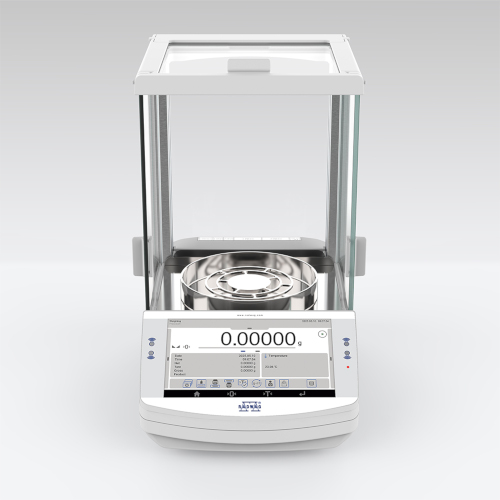 AS X7 Analytical Balances
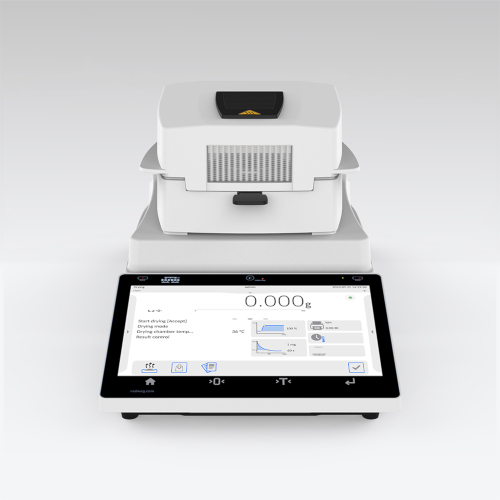 Moisture Analyzers
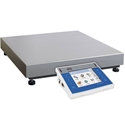 PGC Scales
 Checkweighers
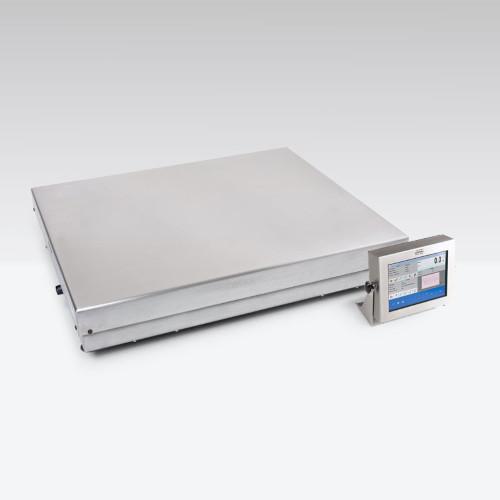 HRP High Resolution Scales
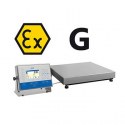 Hazardous Area Endangered with Gas Explosion
 Hazardous Area Endangered with Gas and Dust Explosion
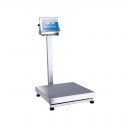 H315 H Waterproof Platform Scales
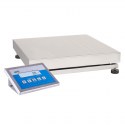
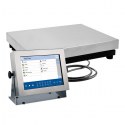
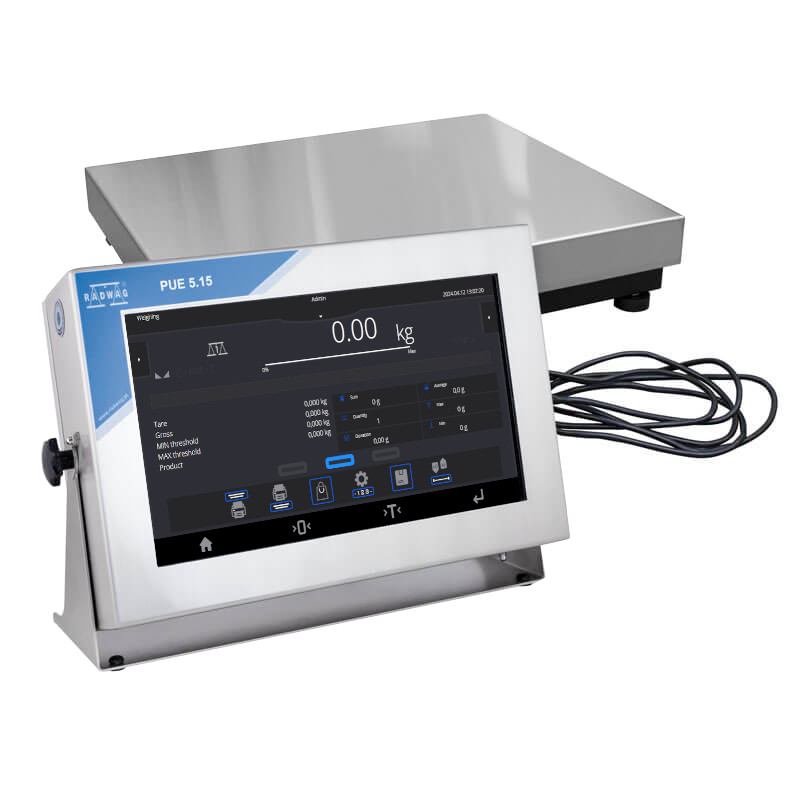




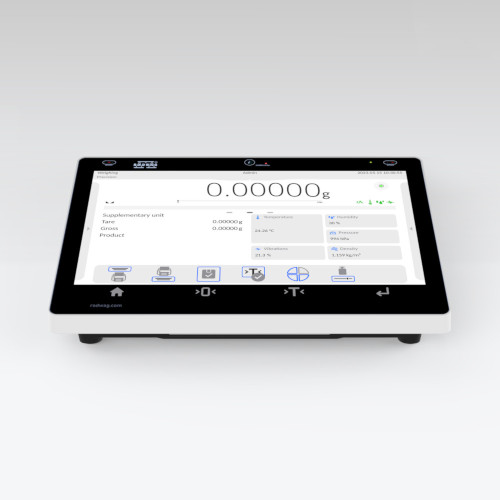 5Y Terminal
 PUE CY10 Weighing Terminal
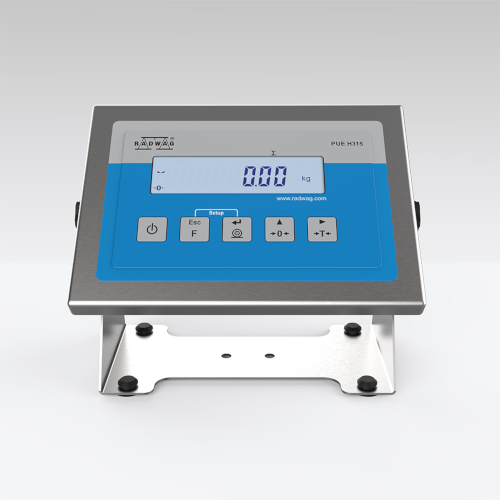 PUE H315 Weighing Terminal
 PUE C315 Weighing Terminal
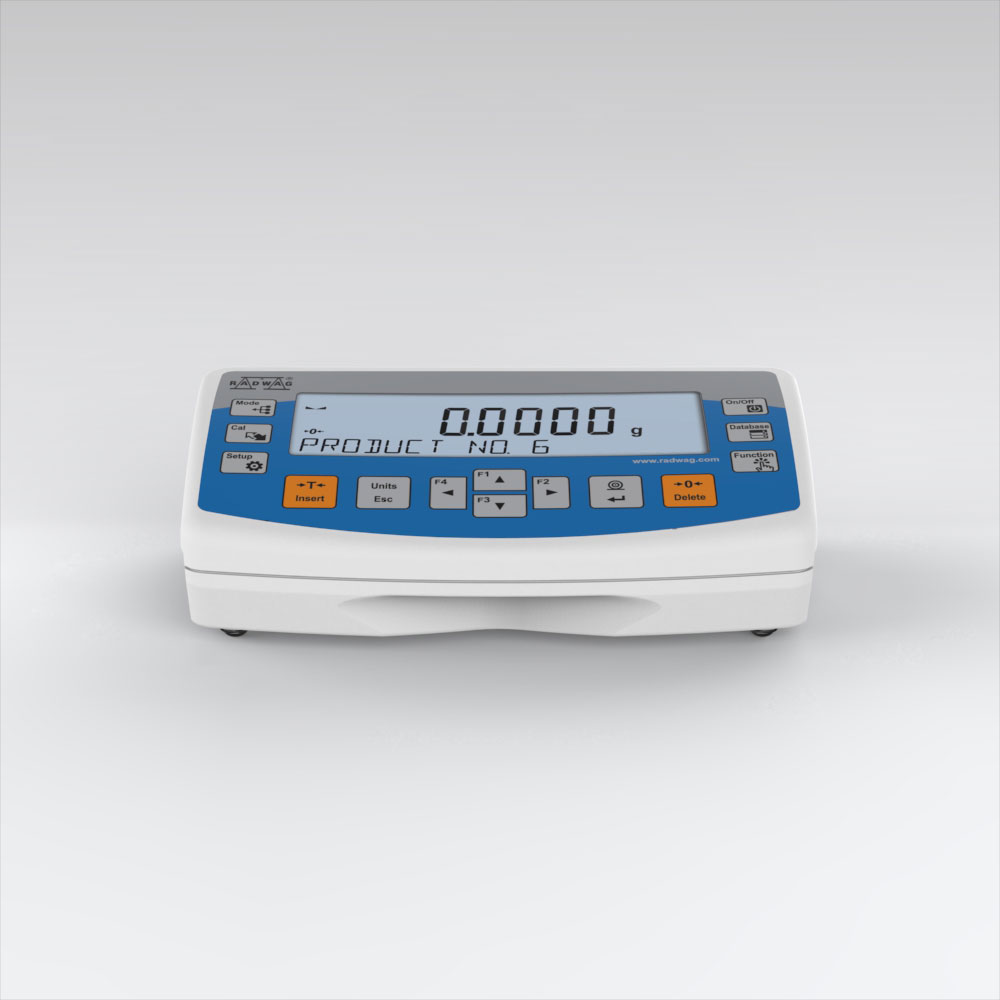 R Terminal (WDM-8)


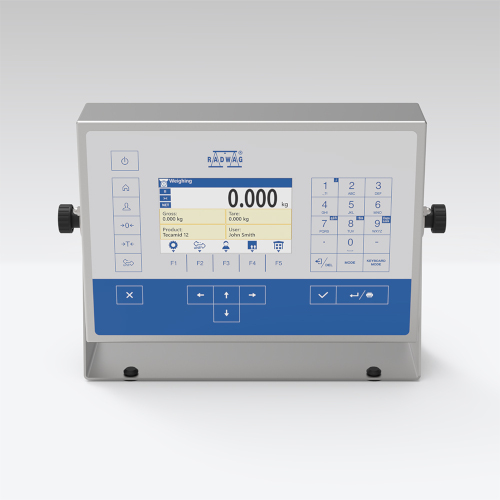












 Albanian
 Danish
 Nederlandse
 Estonian
 Finnish
 Hungarian
 Icelandic
 Kazakh
 Latvian
 Lithuanian
 Macedonian
 Norwegian
 Portuguese
 Romanian
 Russian
 Slovak
 Slovenian
 Swedish
 Ukrainian
 Serbian
 Montenegrin
 Português (Brasil)
 Deutsch
 Español
 Français
 Italiano
 Japanese (日本語)
 Polski
 Türkiye
 Česky
 USA
 中文