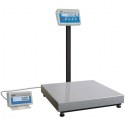
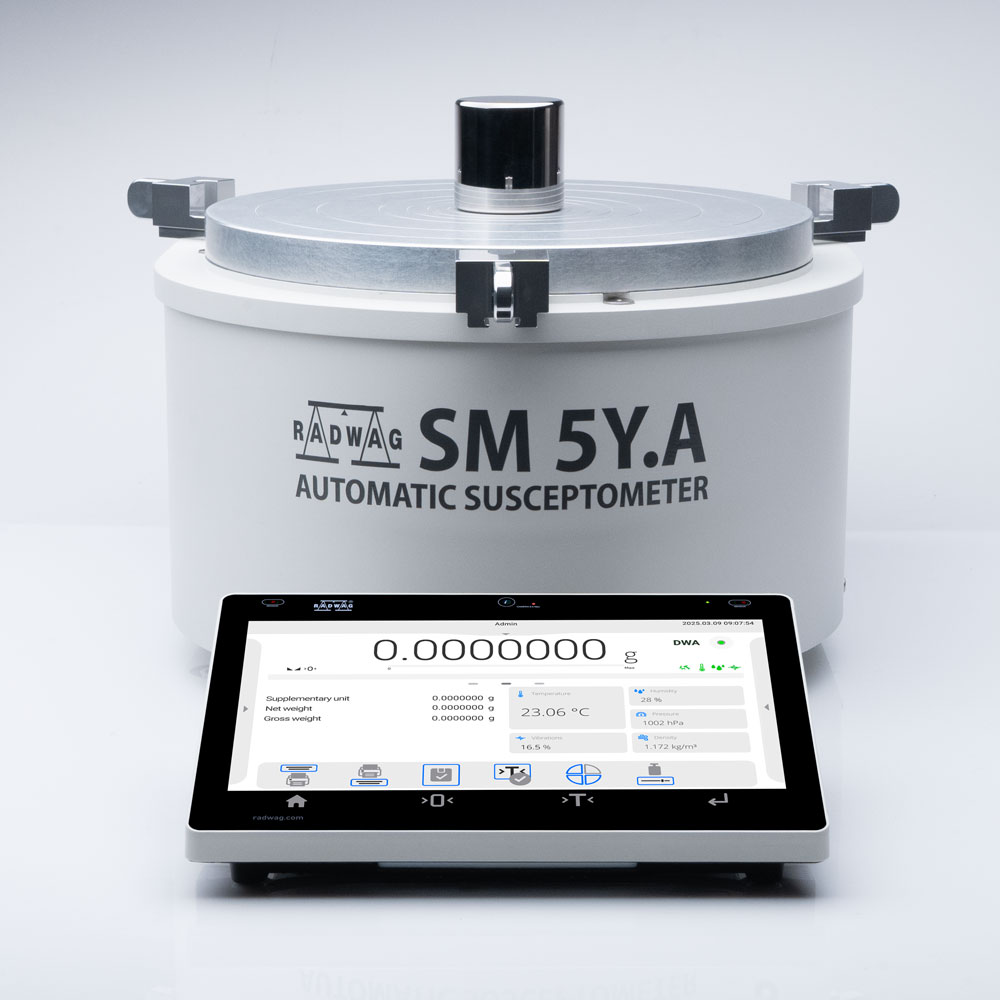
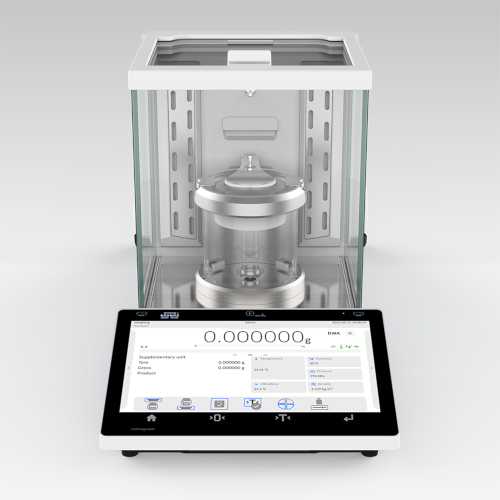
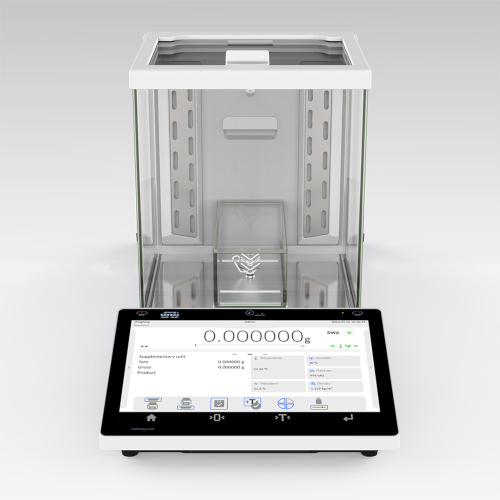
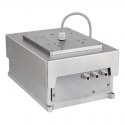
















Terminal de Pesagem PUE HY10/P (Painel)

Selected language Português (Brasil)
Terminal de Pesagem
This image is for reference only.

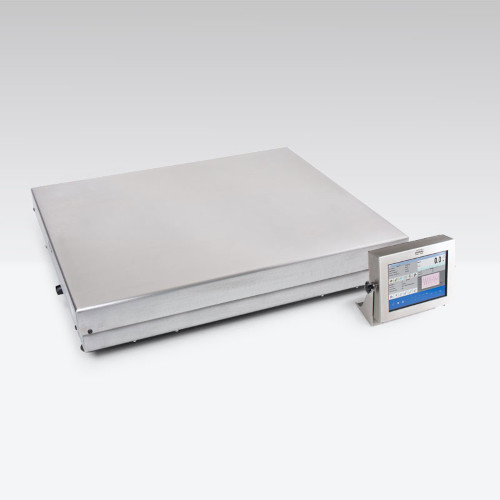
Terminal de Pesagem PUE HY10/P (Painel)

Código do produto: WX-008-0030
close
Wybierz modele:
Terminal de Pesagem PUE HY10
Terminal de Pesagem PUE HY10/P (Painel)
Selecionar tudo
Mostre-me
Baixar
Visão geral

Terminal de Pesagem PUE HY10/P (Painel)

 
O PUE HY10/P é uma solução projetada para integração com painéis de controle. Ele difere da versão padrão do terminal PUE HY10 apenas no tipo da carcaça, que, neste caso, permite uma instalação mais prática. Como os parâmetros técnicos e a funcionalidade de ambas as variantes são os mesmos, o usuário pode escolher a versão que melhor atenda às suas necessidades. Multitarefa, uma ampla gama de interfaces de comunicação já na versão básica (com possibilidade de expansão), compatibilidade com diversas plataformas de pesagem e uma carcaçaem aço inoxidável com alto grau de estanqueidade tornam o terminal ideal como centro de controle para balanças industriais multifuncionais e sistemas de pesagem. 


Design e Equipamento

O terminal está alojado em uma carcaça em aço inoxidável AISI 304, que oferece proteção IP66/67/69, permitindo sua operação em condições industriais exigentes, em ambientes com altos níveis de umidade e poeira. Além disso, o PUE HY10/P atende aos rigorosos padrões de higiene aplicáveis nas indústrias alimentícia e farmacêutica.
 
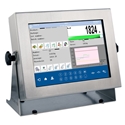
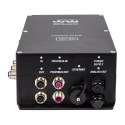
A parte frontal do dispositivo apresenta uma tela gráfica colorida de 10.1 polegadas com resolução de 1024x600 pixels, equipada com um painel touch e teclas de função e numéricas adicionais. O menu claro, a operação intuitiva e o layout legível das informações tornam o terminal conveniente e rápido de usar. A parte traseira da carcaça é ocupada por conectores de interface de comunicação herméticos.


Em sua configuração básica, o terminal suporta uma plataforma analógica – célula de carga, mas graças ao módulo DP-6, o número de balanças suportadas pode ser aumentado para duas. Um máximo de quatro plataformas podem ser conectadas, incluindo, por exemplo, plataformas de alta resolução, módulos de pesagem ou balanças externas, utilizando interfaces RS232 ou TCP/IP.


Software versátil

O terminal PUE HY10 está equipado com um software abrangente que supera significativamente a funcionalidade de outros terminais RADWAG. Ele permite pesagem avançada, contagem de peças, dosagem, etiquetagem, formulações, balança de caminhões, pesagem percentual, SQC e PGC.
 
O sistema de gerenciamento de dados baseado em bancos de dados MySQL (que abrange operadores, produtos, pesagens, embalagens, formulações, clientes, rótulos, processos de dosagem e relatórios) garante a coleta, o processamento e o compartilhamento eficientes de informações, mesmo durante o uso intensivo do terminal. Isso torna o dispositivo ideal para sistemas de coleta e análise de dados de pesagem em processos de produção.


O software suporta a cooperação com diversos dispositivos periféricos, como impressoras de etiquetas, leitores de código de barras, leitores de cartões transponder, colunas de sinalização e botões de controle externos, garantindo sua configuração e integração ao sistema. Além disso, o espaço de trabalho personalizável permite ao usuário adaptar o layout das informações, gráficos de barras, botões e elementos gráficos, ajustando a interface às necessidades individuais e aos requisitos do processo.


Interfaces de Comunicação

Em sua configuração padrão, o terminal está equipado com RS232, USB e Ethernet, além de entradas/saídas digitais, e suporta os protocolos CBCP-03 (caractere) e Modbus TCP/IP. É possível expandir o conjunto com RS485, saídas analógicas (4–20 mA, 0–20 mA, 0–10 V), 12 entradas/saídas adicionais e conectividade Wi-Fi®, bem como suporte para os protocolos PROFIBUS, PROFINET e Ethernet/IP.
 
Graças a uma ampla gama de interfaces, o terminal pode funcionar com dispositivos externos, sistemas de automação e controle e sistemas de TI de nível superior, garantindo uma integração flexível em ambientes industriais complexos. 


Wi-Fi® é uma marca registrada da Wi-Fi Alliance®.
Ficha Técnica
Display

10,1″ gráfico colorida tela touchscreen

Dimensões até dispositivo L x P x A

357×275×120

mm

Dimensões da embalagem L x P x A

420×350×230

mm

Peso líquido

5,7

kg

Peso bruto

6,5

kg

Classe de proteção

IP 66 / 67 / 69

Painel touch

capacitiva

Teclado numérico

tela touchscreen

Carcaça

aço inoxidável

Interface de comunicação

2×RS232, 2×USB-A, Ethernet, 4 IN / 4 OUT (digital)

Interfaces opcionais

módulo Wi-Fi® 802.11 b/g/n, módulo Profibus (DP SLAVE), módulo RS485, módulo PROFINET (RJ45), módulo de saída analógica (4-20mA, 0-20mA, 0-10V) , 12IN / 12OUT (IN – 5-24 VDC, OUT – max 30 VDC, 0,5 ADC)

Impedância mínima da célula de carga

50 Ω

Impedância máxima da célula de carga

1200 Ω

Tensão de excitação da célula de carga

5V DC

Aumento máximo até sinal

19,5 mV

Conexão de células de carga

4 ou 6 fios + blindagem

Temperatura de operação

-10 – +40

°C

Umidade relativa

10% – 85% RH sem condensação

Sistema operacional

Linux

Processador

quad-core 64-bit Cortex-A53 1,2 GHz

Memória

RAM 1GB LPDDR2

Memória de dados

16 GB (micro SD)

Número máximo de plataformas

4

CE
Funções
Dosing

Dosing

Weighing process for which reference mass has been determined together with tolerance for its determination. Dosing tolerance is given in [%] and it is calculated in relation to the reference value thus being a permissible deviation of this process. This solution is used for weighing powders, liquids and loose materials. Dosing function performance is often supported with bargraph - load indicator. For industrial scales it is possible to use a control systems of dosing process.
Labelling

Labelling

Marking products with the right symbols contributes to quick and reliable identification. The balance/scale usually transfers product mass or product quantity to the label printer. The transferred value is printed with the following information: bar code, pictogram, content, address etc. In laboratory the labelling is performed in a semi-automatic mode, for industry in an automatic one (dynamic scales).
Plus/Minus Control

Plus/Minus Control

Control of sample's mass carried out with reference to specified MIN and MAX thresholds. The weight is considered to be correct if it is comprised within threshold values. A graphic visualisation of weighing result is displayed in a form of a bar graph.
Percent Weighing

Percent Weighing

Percent Weighing function is used for comparision of measured products with mass standard. Mass of a mass standard may be a numeric value taken from a database or it may be determined through a measurement process. Each measured product is compared to mass standard, mass of which is presumed as a model 100% ideal mass. For products weighing less than the mass standard, obtained results are lower than 100%, for products weighing more, the obtained results are greatly  exceeded.
Totalizing

Totalizing

Function adding new mass value to already obtained one. This allows to determine mass content of the mixture, being a composition of number of different consistence components. Totalizing is limited by maximum capacity parameter.
Parts counting

Parts counting

Function using mass measurement for determination of  measured items quantity. Mass of a single item is required for this process. It may be either estimated through weighment or taken from a database. For items counting the following algorithm is used: all items mass / single item mass = quantity. Function operation is supperted by a mechanism of Automatic Correction of Accuracy. This allows to update single item mass in course of the process. To a certain extend Automatic Correction of Accuracy eliminates error which may be a result of different mass values of seemingly alike single elements. For industry solutions items counting may be simultaneously carried out with checkweighing and dosing thus industry solutions feature audio signalling base informing that specified number of items has been weighed. It is possible to apply weighing systems using few platfroms of different MAX capacities and different accuracies.
Peak hold

Peak hold

Function registering the greatest temporary indication occurring in course of the weighing process. It is most often used in medical scales in order to hold the measurement indication.
Formulation

Formulation

Function supporting the mixture making process, wherein the mixture contains various components. Formulation function usually uses the balance/scale database of components. Formulation serves for monitored checkweighing of every single component with a given tolerance. It is enriched with a set of individual settings.
Statistics

Statistics

Statistiscs function registers and analyses performed measurements. This supplies the user withthe following information: Max and Min standard deviation, average value, variance, range et.
Checkweighing

Checkweighing

Checkweighing function is used for checking whether the measured sample mass is within the predefined threshold values, Low [LO] and Hgh [HI]. The thresholds are given in [g] and [kg] units. Current state of a sample being measured is signalled by means of pictorgams located on a display for laboratory balances, for industrial scales Stackligt System is used. This visual +/- inspection is in operation during segregation, control or packing process of products for which mass has bees determined with a specifaied tolerance, eg. 12860 g ± 5 g
GLP Procedures

GLP Procedures

Diagnostic function allowing to objectively document performed measurements. GLP procedures may be either presented in a short report form or extended one.
Animal weighing

Animal weighing

Process of mass determination for a product which may unwillingly reposition within the weighing pan. Mass determination in such cases requires much longer period of time when compared to typical weighing process. It is the user who defines period of time needed for control of measured product mass. The user can thus optimize the function depending on the measured product characteristics.
Differential weighing

Differential weighing

Differential weighing informs about mass variation a particular sample, wherein the said variation is a result of manufacturing processes.

Differential weighing is often applied in product control process, for which reference product parameters have been specified in order to be used as a source of comparison for the whole series.
Insuchcasestandard deviation is the information which tells about quality and completeness of a final product. For systems based on a feed-back technique such information may be used by control units.
Replaceable unit

Replaceable unit

Weight function to change the weight unit.
Statistical Quality Control

Statistical Quality Control

Statistical control for determination of basic statistical criteria: maximum, minimum, standard deviation, mean values for each batch, etc.
ALIBI Memory

ALIBI Memory

"ALIBI" memory enables saving and storing up to 100000 measurements.  Measurements are saved automatically upon each pressing of the key. There is no need for any additional operations or changing settings.
The following data related with the measurements is saved: measurement date; measurement time; result (mass); tare value; operator carrying out the measurement (logged in); product name.
The software saves the measurement in a so called loop, i.e. when the measurement no. 100001 is saved, the measurement 1 gets automatically deleted from the memory.
Measurements saved to balance memory cannot be deleted.
You can preview and print out the data saved to the ALIBI database.
Transactions

Transactions

Complex weighing mode for registration of weighings that are part of transactions such as sale, purchase and warehouse transfer. You can create a new transaction using the scale. It is possible to pause the transaction or abort it.  The function supports warehouse management in an enterprise.
Documentação
Ficha técnica
Data Sheet Data Sheet
Data Sheet

Mostre-me
Mostre-me
Baixar
Baixar

Choose more product:
Mostre-me Mostre-me BaixarBaixar
Baixar
Drivers

Plik GSD Profibus (1.321 KB)

GSD do Profinet (4.574 KB)

Compatível com
R-LAB

Compatível com

RAD-KEY

Compatível com

Newsletter

Assine a newsletter se quiser receber notícias da RADWAG.

Ver mais
Balanças e Plataformas Radwag
Torunska 5
26-600 Radom
Poland
tel.: +48 48 386 60 00
e-mail: export@radwag.com
TIN: PL7960000327
Vimeo Radwag YouTube Radwag Facebook Radwag LinkedIn Radwag
© 2026 Balanças e Plataformas Radwag. Todos os direitos reservados.

Selecione um idioma

×
Change language AlbanianAlbanian
Change language DanishDanish
Change language NederlandseNederlandse
Change language EstonianEstonian
Change language FinnishFinnish
Change language HungarianHungarian
Change language IcelandicIcelandic
Change language KazakhKazakh
Change language LatvianLatvian
Change language LithuanianLithuanian
Change language MacedonianMacedonian
Change language NorwegianNorwegian
Change language PortuguesePortuguese
Change language RomanianRomanian
Change language RussianRussian
Change language SlovakSlovak
Change language SlovenianSlovenian
Change language SwedishSwedish
Change language UkrainianUkrainian
Change language SerbianSerbian
Change language MontenegrinMontenegrin
Change language page on Deutsch Deutsch
Change language page on English English
Change language page on Español Español
Change language page on Français Français
Change language page on Italiano Italiano
Change language page on Japanese (日本語) Japanese (日本語)
Change language page on Polski Polski
Change language page on Türkiye Türkiye
Česky
Change website to USA USA
Change language page on 中文 中文
Presentations Presentations Presentations
Subscribe Subscribe Subscribe
Radwag in Facebook Radwag in Facebook Facebook
Radwag in YouTube Radwag in YouTube Youtube
Radwag in Vimeo Radwag in Vimeo Vimeo
Radwag in LinkedIn Radwag in LinkedIn LinkedIn
Webinars Radwag Webinars Radwag Webinars
40 Years Together 40 Years Together Years Together
Slide to go back ↩